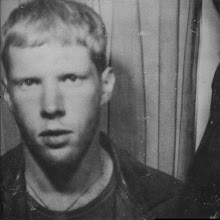
Photos by Stephen Hilyard.
Showing posts with label exploration. Show all posts
Showing posts with label exploration. Show all posts
26.7.12

24.5.12
WHITE ECHIDNA

Rare white echidna found in western Qld
A grazier has found a rare albino echidna near Tambo, south-east of Longreach in western Queensland.
4.5.12
THRIHNUKAGIGUR MAGMA CHAMBER


 For the first time in history scientists have descended 650ft into the magma chamber of a volcano.
These incredible images show one explorer gently lowering himself into the heart of the dormant Thrihnukagigur volcano in Iceland.
Known as a 'sleeping volcano' because it could come back to life at any time, Thrihnukagigur is credited with helping to create the Atlantic island we call Iceland when it last erupted 3,000 years ago.
Read more: dailymail.co.uk
2.3.12
80 YEAR HIDEOUT


Six-Legged Giant Finds Secret Hideaway, Hides For 80 Years
"Here's the story: About 13 miles from this spindle of rock, there's a bigger island, called Lord Howe Island.
On Lord Howe, there used to be an insect, famous for being big. It's a stick insect, a critter that masquerades as a piece of wood, and the Lord Howe Island version was so large — as big as a human hand — that the Europeans labeled it a "tree lobster" because of its size and hard, lobsterlike exoskeleton. It was 12 centimeters long and the heaviest flightless stick insect in the world. Local fishermen used to put them on fishing hooks and use them as bait.
Then one day in 1918, a supply ship, the S.S. Makambo from Britain, ran aground at Lord Howe Island and had to be evacuated. One passenger drowned. The rest were put ashore. It took nine days to repair the Makambo, and during that time, some black rats managed to get from the ship to the island, where they instantly discovered a delicious new rat food: giant stick insects. Two years later, the rats were everywhere and the tree lobsters were gone.
Totally gone. After 1920, there wasn't a single sighting. By 1960, the Lord Howe stick insect, Dryococelus australis, was presumed extinct.
There was a rumor, though.
Some climbers scaling Ball's Pyramid in the 1960s said they'd seen a few stick insect corpses lying on the rocks that looked "recently dead." But the species is nocturnal, and nobody wanted to scale the spire hunting for bugs in the dark....."
27.1.12


 Harry Adams paintings about Ernest Shackleton's journey.
17.1.12

6.12.11


2.6.11
1.6.11




27.5.11


29.4.11


25.4.11


6.3.11
CAMP ONE

CAMP ONE, MOUNT EVEREST, TIBET-05-06-05-
Anne Parmenter looks over her tentsite in Camp One, at 7,100 meters on the North Col of Mt. Everest Friday after waking from her first night at the camp. She and most other members of the Connecticut Everest Expedition spent a night on the col camp then returned to Advanced Basecamp. They will make several more trips to Camp One and perhaps one to Camp Two to acclimitize before heading for the summit of Everest in the last two weeks of May.
Subscribe to:
Posts (Atom)